You’re standing in the grocery store, enchilada recipe pulled up on your phone, and the recipe just says “enchilada sauce.” Red and green are sitting side by side on the shelf. They’re priced the same. You grab red because that’s what feels right, but you’re not actually sure. That’s the moment this guide is built for.
At Perfektfood, we break down Mexican cooking decisions the way they deserve: with real information about ingredients, flavor, heat, and practical pairings, not vague reassurances that “both are great.” This guide covers exactly what makes red and green enchilada sauces different, which proteins belong with each, how homemade versions compare to canned, and how to make a confident call every single time you cook enchiladas.
The ingredient difference that actually matters
Before you can choose between red vs. green enchilada sauce, you need to understand what each one is actually made of. The ingredient difference isn’t cosmetic. It shapes everything about how the sauce tastes, behaves in the oven, and interacts with your filling.
Red enchilada sauce is built from dried red chiles. The most common are guajillo, ancho, and pasilla, either used whole and rehydrated or in the form of chili powder. Most stovetop versions start with a roux: oil and flour cooked together, then spices stirred in briefly before broth is whisked in and the whole thing simmers until thick. Some recipes add tomato paste or tomato sauce for extra depth and color. The result is a sauce with real body, an earthy base, and a flavor that comes primarily from the dried chile foundation rather than fresh produce.
Green enchilada sauce works from a completely different starting point. Tomatillos, roasted green chiles, or both form the flavor base, and fresh aromatics like onion, garlic, cilantro, jalapeño, or serrano get blended in. Green sauces are generally not built on a roux; they get their body from the blended and cooked produce itself, which is why they tend to be looser and brighter in texture. The tomatillo’s natural acidity gives green sauce a tangy, slightly sharp flavor profile that red sauce typically doesn’t have.
Flavor and heat: what you actually taste
Most comparisons between these two sauces collapse into vague descriptions like “red is richer” and “green is fresher.” That’s true, but it doesn’t help you cook. Here’s what the flavor difference actually means at the table.
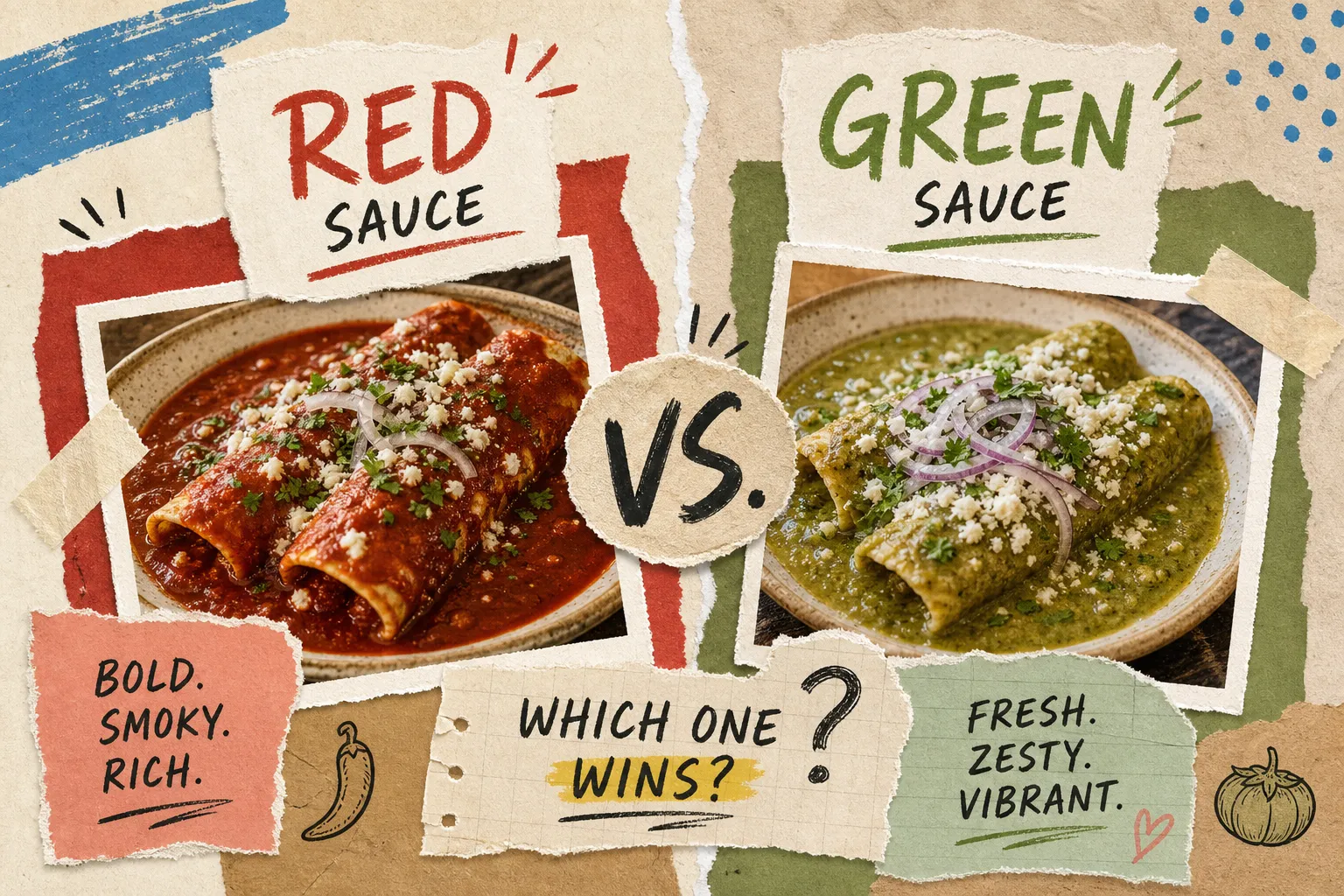
Red enchilada sauce tastes earthy, smoky, and deeply savory. Ancho chiles (1,000 to 1,500 SHU) and guajillo (2,500 to 5,000 SHU) are naturally mild to medium in heat, which means a standard red sauce carries warmth without being aggressive. When tomato is included, it adds a subtle sweetness that rounds out the chile’s bitterness. The overall effect is comforting and familiar: a flavor many U.S. diners associate with a classic plate of enchiladas.
Green enchilada sauce tastes bright and fresh, with a tangy sharpness from the tomatillos and a herbal edge from the cilantro and green chiles. It reads as lighter on the palate, even when the recipe is generous with fat. Green sauce’s tomatillo-driven acidity and freshness are distinctive; while red sauces can be brightened with citrus or fresh aromatics, they typically express different, earthier flavor notes rather than replicating that same quality.
On heat level, color is not a reliable guide. A red sauce built with chile de árbol (15,000 to 30,000 SHU) will be significantly hotter than a green sauce made primarily from mild tomatillos and a single jalapeño. A green sauce loaded with serrano peppers will outpace any ancho-based red sauce. Heat is a formulation choice, not a color rule. Always check the specific chiles in a recipe, or taste a canned sauce before pouring it over your filling.
Which proteins and fillings belong with each sauce
This is where the flavor difference becomes a practical cooking decision. The pairing logic isn’t arbitrary. It comes down to whether your filling needs richness amplified or richness balanced.
Red enchilada sauce belongs with heartier proteins. Shredded beef, ground beef, and chicken thighs all hold up to its earthy depth without getting lost in it. Heavier, meltable cheeses like Colby Jack, Monterey Jack with cheddar, or a Mexican four-cheese blend complement the sauce’s savory base. Bean-and-cheese or beef enchiladas coated in red sauce produce the bold, satisfying flavor most people are chasing when they want classic enchiladas. Sides like refried beans, Mexican rice, and guacamole all reinforce the same warm, savory profile.
Green enchilada sauce does its best work with lighter proteins. Chicken breast, pulled chicken, and lighter preparations of fish can all pair well with the sauce’s brightness rather than being overwhelmed by it. Tangy or herbal fillings, like chicken mixed with cream cheese or a spoonful of salsa verde, echo the sauce’s own acidic notes and create a coherent flavor from the inside out. Fatty pork preparations such as carnitas are a strong pairing too: the green sauce’s acidity can help balance the richness in a way that’s noticeably different from red sauce. Sour cream and cotija cheese are popular accompaniments for enchiladas verdes, reinforcing the freshness the sauce already brings.
If you’re making cheese-only enchiladas and genuinely can’t decide, either sauce works. Red sauce gives you something more indulgent; green sauce gives you something lighter. Pick based on the crowd you’re feeding.
Homemade versus canned: the honest tradeoffs
Both red and green enchilada sauce can be made in roughly 15 minutes on the stovetop, and both are genuinely worth making from scratch when you have the time. In our experience, the flavor difference between homemade and canned is noticeable, but not so dramatic that canned sauce becomes a compromise you need to apologize for.
Red sauce from scratch needs pantry staples you likely already have: chili powder, oil, flour, broth, and optionally tomato sauce. It keeps in the fridge for up to a week and freezes well for three months, so a double batch is almost always worth it. Green sauce requires fresh or canned tomatillos, green chiles, onion, garlic, and optional jalapeño. It has a slightly shorter fridge life at four days, but freezes just as well. If you cook enchiladas more than once a month, making a big batch of each sauce and freezing it in portions is a practical efficiency move. Perfektfood’s enchilada sauce guides cover exact ratios and step-by-step technique for both versions, worth bookmarking before your next cook. If you’d like a reliable starting point for a homemade red sauce, try this red enchilada sauce recipe, or for a classic Mexican red chile take a look at this Mexican red chile sauce walkthrough.
On the canned side, red enchilada sauce is widely available at US grocery stores and performs reliably for weeknight builds. Hatch Organic and Simply Organic are strong options in the red category; Simply Organic earned a 4.8 out of 5 from food tasting panels, with reviewers noting notes of chocolate and smoke. For green, Las Palmas is the most consistently recommended canned option, described as tangy and fresh-tasting despite being shelf-stable. When buying canned green sauce, check the label for tomatillo content: brands that lead with tomatillo in the ingredient list tend to taste noticeably better than those relying primarily on green chiles alone. For a useful roundup of top store-bought options, see this best canned enchilada sauces.
Regional roots: why both sauces have a permanent place
Red enchiladas are strongly associated with northern Mexican and New Mexico-style dried-chile traditions, where ingredients like guajillo and ancho are foundational to the cuisine. The depth and preservation quality of dried chiles made them practical for regions where fresh produce was seasonal or scarce, and that tradition carried forward into the flavors that define the style today. To learn more about the characteristics of the guajillo chile specifically, this guide on the guajillo pepper is a good reference.
Green enchiladas, known as enchiladas verdes, carry strong ties to regions where tomatillos and fresh green chiles grow abundantly, including parts of central Mexico. The tomatillo is not a substitute for tomato in this context. It’s a distinct ingredient with its own culinary identity, and green enchilada sauce is where that identity is most clearly expressed in everyday Mexican cooking.
Neither sauce is more authentic than the other. They reflect different regional ingredients and culinary traditions that developed in parallel, not in competition. In the US, both salsa roja and salsa verde versions are fully established in Mexican-American cooking, and choosing one over the other is a flavor decision rather than a statement about authenticity.
How to pick the right sauce for your specific dish
You now have the full picture. Here’s how to translate it into a decision the next time you’re standing at that store shelf or starting a batch from scratch.
Red enchilada sauce belongs with beef, ground meat, or anything that benefits from earthy, smoky depth. Reach for green when your filling is chicken, pulled pork, or anything where brightness will cut through richness and create balance. The sauce should complement the filling’s character, not overpower it in either direction.
If you’re cooking for a mixed crowd with different heat tolerances or flavor preferences, use both in the same pan. Split the baking dish down the middle: red sauce on half, green on the other. It’s a practical approach that works just as well at home as it does in a restaurant setting, and it lets everyone eat the same meal without anyone compromising. Both sauces pair naturally with the same sides, so the rest of the spread stays unified.
Make the call with confidence
Here’s what you now know. Red sauce means deeper, earthier flavor and works best with hearty proteins. Green sauce means brighter, tangier, and best with lighter proteins and fresh fillings. Heat level belongs to the specific chiles in the recipe, not the color of the sauce. Both homemade and canned versions are legitimate depending on your time and goals.
The most useful thing you can do is cook both sauces in the same week and taste them side by side. Reading about the difference is useful. Actually tasting it will lock in the distinction permanently and give you an instinct for pairing that no guide can fully replicate.
If you want to go deeper on enchilada technique, fillings, bake times, or building seasoning blends from scratch, Perfektfood’s Mexican cooking guides cover all of it with the same level of detail you found here. The best sauce is always the one that fits the filling in front of you, and you now have exactly what you need to choose it with confidence.