What is Barbacoa? The Authentic Slow-Cooked Mexican Meat Guide
Category: Mexican Cuisine | Topic: Traditional Dishes | Reading Time: ~8 min
Few dishes in the world carry as much history, depth, and cultural weight as barbacoa. Long before Chipotle turned it into a burrito filling and food trucks brought it to cities across the United States, barbacoa was — and remains — a sacred slow-cooking tradition deeply rooted in Mexican and pre-Columbian culinary heritage.
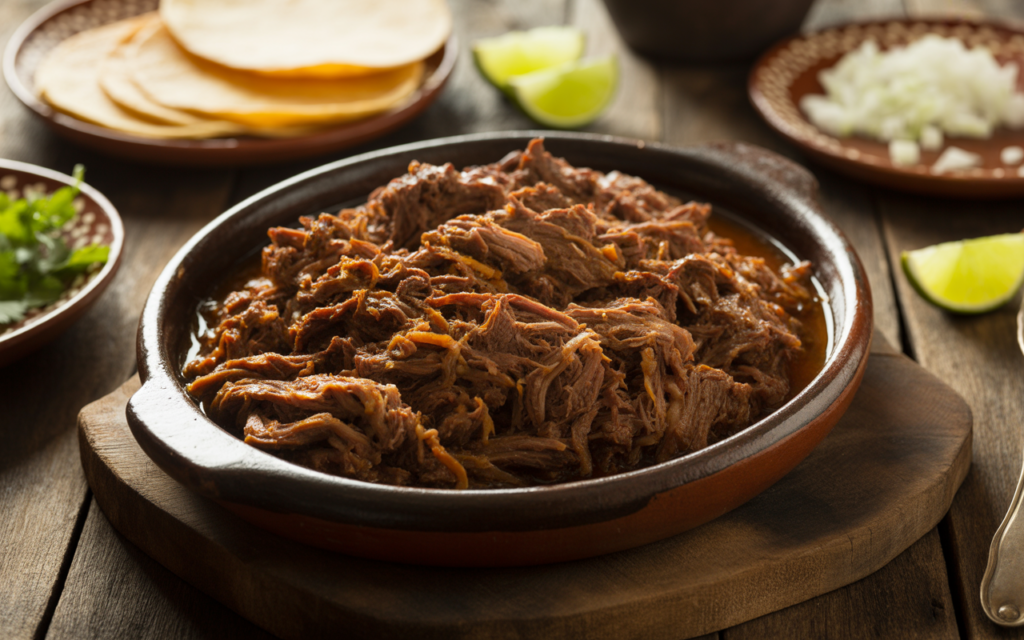
Tender, aromatic, fall-apart meat that has been gently cooked for hours in a pit, wrapped in agave leaves, or simmered low and slow in a pot: that is the essence of barbacoa. But what exactly is it, where does it come from, and how do you make it properly at home? This guide answers every question.
What Is Barbacoa?
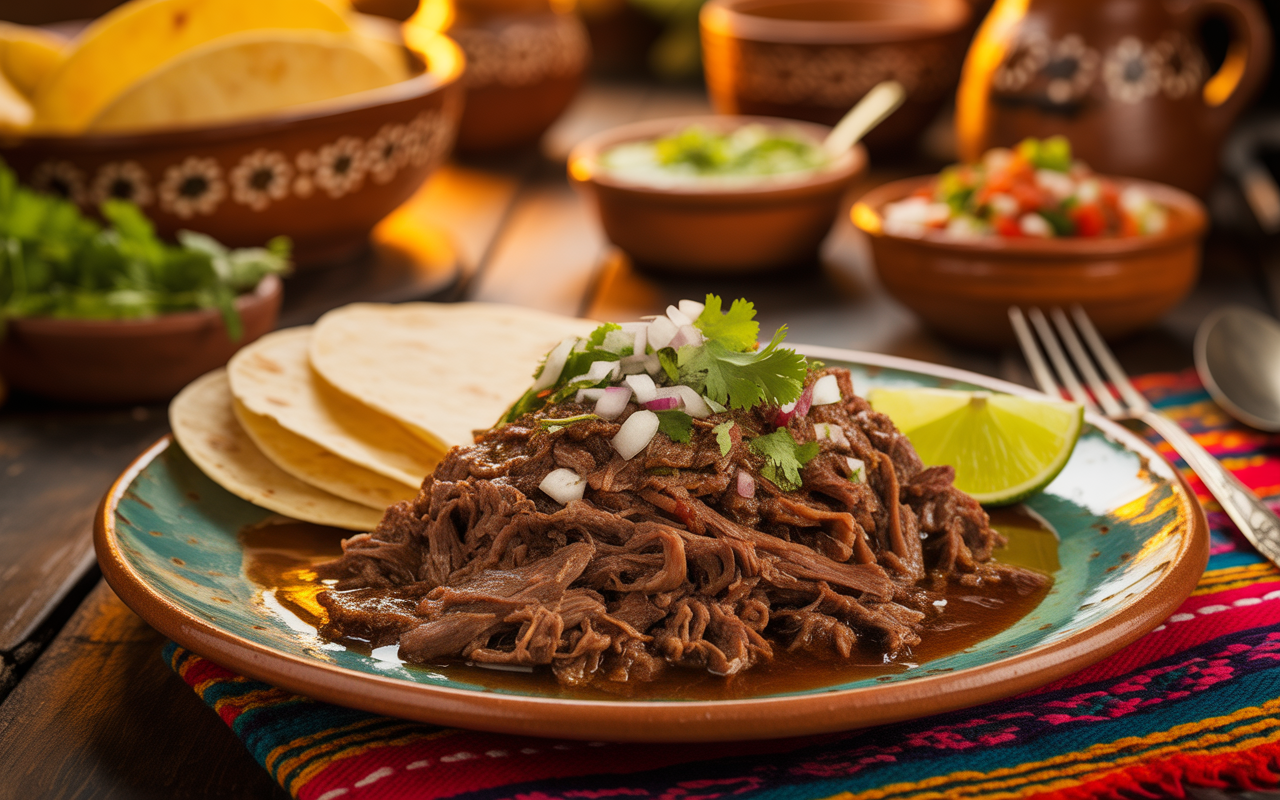
Barbacoa is a traditional Mexican cooking method — and the dish it produces — in which meat is slow-cooked until it reaches an almost unbelievably tender, shreddable texture. The word itself is widely considered the etymological ancestor of the English word “barbecue,” though the technique is fundamentally different from what most people picture when they hear that word.
Where American barbecue relies on dry heat, smoke, and open flames, traditional Mexican barbacoa is all about low, moist heat. The meat — typically beef cheeks (cachete), lamb, goat, or beef tongue — is seasoned generously with dried chiles, herbs, and spices, then slow-cooked until it literally falls apart at the touch of a fork.
Key fact: Barbacoa refers both to the cooking method and the resulting dish. The technique predates European contact in the Americas, making it one of the oldest surviving culinary traditions in the Western Hemisphere.
The Origins of Barbacoa: A Culinary Legacy
The history of barbacoa is a story that stretches back centuries, intertwining indigenous Mesoamerican traditions with the culinary exchanges that followed the Spanish conquest of Mexico.
The word “barbacoa” is believed to derive from a Taino word — the Taino being an indigenous Caribbean people — referring to a wooden framework used to cook or smoke meat over fire. Spanish colonizers encountered this technique in the Caribbean and eventually brought the concept to mainland Mexico, where it merged with existing indigenous cooking methods.
In pre-Columbian Mexico, indigenous communities across the highlands had long practiced a method of cooking meat in underground pits lined with hot stones and maguey (agave) leaves. This technique, which traps heat and steam, was already producing extraordinarily tender, flavorful results long before Europeans arrived.
Over the centuries, the two traditions melded. Today, traditional barbacoa — particularly as practiced in the states of Hidalgo, Tlaxcala, Mexico City, and parts of Oaxaca — still uses the pit method, and the dish is considered essential to weekend and celebratory culture in many Mexican communities.
What Meat Is Used for Barbacoa?
Traditionally, barbacoa was prepared with whatever protein was available — whole lamb, goat, or even entire beef heads (cabeza de res). The choice of meat varied significantly by region:
- Hidalgo and central Mexico: Lamb or mutton (borrego) is the preferred protein, slow-cooked in pit ovens and wrapped in maguey leaves. This is considered by many Mexicans the most authentic regional expression of barbacoa.
- Northern Mexico and the U.S. border region: Beef cheeks (cachete) and beef head meat (cabeza) dominate, prized for their extraordinary fat content and deeply savory flavor.
- Oaxaca and southern states: Goat (chivo) is common, often prepared in a clay pot or pit with a rich chile-based marinade.
- Modern and commercial preparations: Chuck roast, short ribs, or brisket are widely available substitutes that still produce excellent results.
Pro tip: If you can source beef cheeks from a good butcher, they are the single best cut for home barbacoa. The high collagen content breaks down into gelatin during the long cook, giving the meat a silky, unctuous quality that leaner cuts simply cannot replicate.
How Is Barbacoa Made? The Traditional Method
The most authentic barbacoa is made in an underground pit called a hoyo. Here is how the traditional method works:
- A pit is dug in the earth, typically lined with stones that are heated over a wood fire for several hours until they hold significant heat.
- The meat is seasoned — often overnight — with a marinade (adobo) made from dried guajillo, ancho, and chipotle chiles, along with garlic, cumin, black pepper, cloves, and vinegar.
- Maguey (agave) leaves are used to line the pit and wrap the meat, imparting a subtle earthy flavor while sealing in moisture and heat.
- The wrapped meat is lowered into the pit, often alongside a pot of consomé (broth) that collects the dripping juices and becomes a rich soup served alongside the meat.
- The pit is sealed — traditionally with wet burlap and earth — and the meat cooks slowly for 6 to 12 hours, often overnight, emerging fall-apart tender in the morning.
This is why traditional barbacoa is a Saturday-night-to-Sunday-morning endeavor in Mexico. Families or vendors prepare the pit late on Saturday, and barbacoa is served fresh for Sunday breakfast — typically from around 7 AM until it sells out.
Barbacoa vs. Birria: What Is the Difference?
This is one of the most frequently searched questions in Mexican food, and understandably so — both dishes share many characteristics. Here is a clear breakdown:
| Barbacoa | Birria | |
|---|---|---|
| Origin | Pan-Mexico / Caribbean roots | Jalisco, Mexico |
| Primary meat | Beef cheeks, lamb, goat | Beef, goat, lamb |
| Cooking method | Pit, pot, or slow cooker | Braised in chile broth |
| Broth / consomé | Yes — served alongside | Yes — served for dipping |
| Flavor profile | Earthy, smoky, deeply savory | Spicy, rich, tangy |
| Typical serving | Tacos, consomé, tortas | Tacos, quesabirria, consomé |
In short: both dishes celebrate slow-cooked, heavily spiced meat and a rich accompanying broth. The key distinctions are regional origin, the specific technique (pit vs. braise), and subtle differences in flavor achieved by those techniques.
How to Make Barbacoa at Home: A Complete Recipe
Authentic pit-cooked barbacoa requires specialized equipment and many hours, but the home stovetop or slow cooker version is surprisingly approachable — and the results are exceptional. This recipe uses beef cheeks or chuck roast for maximum flavor.
Ingredients (serves 6–8)
| Ingredient | Amount |
|---|---|
| Beef cheeks or chuck roast | 2.5 lbs (1.1 kg) |
| Dried guajillo chiles, seeded | 5 whole |
| Dried ancho chiles, seeded | 3 whole |
| Chipotle chiles in adobo sauce | 2–3 chiles |
| Garlic cloves | 6 cloves |
| White onion, quartered | 1 large |
| Apple cider vinegar | 3 tbsp |
| Ground cumin | 2 tsp |
| Dried oregano (Mexican preferred) | 1.5 tsp |
| Ground black pepper | 1 tsp |
| Ground cloves | 1/4 tsp |
| Beef broth | 2 cups (480 ml) |
| Bay leaves | 3 leaves |
| Salt | To taste |
Instructions
- Toast and rehydrate the chiles: Heat a dry skillet over medium heat. Toast the guajillo and ancho chiles for 30–45 seconds per side until fragrant. Transfer to a bowl, cover with boiling water, and soak for 20 minutes until softened.
- Blend the adobo marinade: Drain the soaked chiles and transfer to a blender. Add garlic, onion, chipotle chiles, vinegar, cumin, oregano, black pepper, cloves, and 1/2 cup of the beef broth. Blend until completely smooth. Season generously with salt.
- Marinate the meat: Cut the beef into large 3–4 inch chunks. Coat thoroughly with the adobo and marinate for at least 4 hours, or ideally overnight in the refrigerator for maximum flavor penetration.
- Slow cook: Transfer the marinated meat and all remaining marinade to a large Dutch oven or slow cooker. Add the remaining beef broth and bay leaves. Cook on the stovetop at the lowest simmer for 4–5 hours, or in a slow cooker on low for 8–10 hours, until the meat is completely tender and falls apart easily.
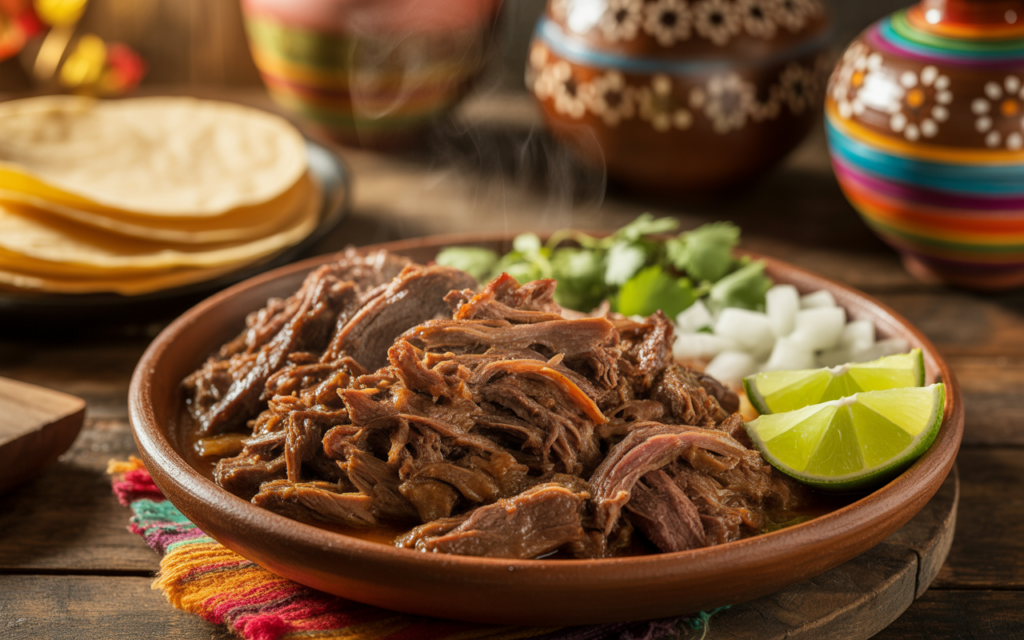
- Shred and serve: Remove the bay leaves. Using two forks, shred the meat directly in the pot, allowing it to soak up the braising juices. Taste and adjust seasoning. The liquid in the pot is your consomé — strain and serve it alongside.
Serving suggestion: Warm corn tortillas in a dry skillet, pile on the barbacoa, and top with finely diced white onion, fresh cilantro, a squeeze of lime, and salsa verde. Serve the strained consomé in small cups for dipping or sipping.
How Is Barbacoa Traditionally Served?
In Mexico, barbacoa is first and foremost a Sunday morning experience. Vendors set up before dawn, and long lines form by 7 or 8 AM. The dish is served in several ways:
- Tacos de barbacoa: The most classic preparation — shredded barbacoa on warm corn tortillas, topped simply with onion, cilantro, lime, and salsa.
- Consomé: The rich broth captured during cooking is served in a cup, sometimes with chickpeas and chile, and sipped alongside the tacos or used as a dipping sauce.
- Tortas: In some regions, barbacoa is stuffed into crusty bolillo rolls with avocado, refried beans, and pickled jalapeños.
- Tacos de cabeza: Tacos made from different parts of the beef head — including lengua (tongue), cachete (cheek), and sesos (brains) — each offering distinct textures and flavors.
Why Has Barbacoa Become So Popular?
Barbacoa’s rise to mainstream food culture in the United States is a story of culinary diaspora, social media, and growing appreciation for authentic global food traditions.
The popularization was initially driven by Mexican immigrants who brought their Sunday barbacoa traditions northward. Taco trucks and taquerias in Texas, California, and the Southwest became the primary entry point for many Americans, well before fast-casual chains arrived.
When Chipotle added “barbacoa” to its menu in the early 2000s — a spiced beef preparation rather than a strictly traditional one — it introduced the name to tens of millions of new eaters. This created a wave of curiosity about the authentic version, driving search traffic and foot traffic to traditional Mexican restaurants.
More recently, social media platforms like TikTok and Instagram have played a significant role, with food creators showcasing the dramatic pit-cooking process — the unearthing of perfectly cooked meat, the billowing steam, the absurdly tender texture — to audiences that had never seen anything like it.
Cultural note: In Mexico, barbacoa is strongly associated with family, community, and Sunday mornings. It is not everyday food — it is celebration food. Understanding this cultural context makes the dish taste even better.
Final Thoughts
Barbacoa is more than a menu item. It is a living thread connecting modern Mexican food culture to ancient indigenous cooking traditions — a dish that has survived centuries, crossed continents, and evolved without losing its soul.
Whether you encounter it in its most traditional form, slow-cooked overnight in a pit lined with maguey leaves in Hidalgo, or in a beautifully seasoned home version made in your slow cooker on a Sunday morning, barbacoa delivers something few dishes can: the experience of deep time, of cooking as patience, and of flavor that simply cannot be rushed.
Try it at home, seek it out at your nearest authentic taqueria, and the next time you see it on a menu, you will know the full story behind those two small words.
Tags: barbacoa recipe · what is barbacoa · Mexican slow-cooked beef · barbacoa vs birria · beef cheek tacos · authentic Mexican cuisine · barbacoa tacos · consomé · traditional Mexican food Category: Mexican Cuisine | Lunch | Dinner